How to Read a Metric or Inch Ruler
Locate the zero reference, identify the smallest marked division, count complete intervals, and estimate only one place beyond the ruler's marked resolution when appropriate.
Start at the zero reference
Do not assume the physical edge is zero; some rulers have a margin before the first mark. Align the object with the zero line and read the mark at the other end without viewing at an angle.
Metric ruler marks
On a typical metric ruler, numbered marks are centimeters and the ten equal intervals within each centimeter are millimeters. The middle 5-millimeter tick may be longer for orientation.
Fractional inch marks
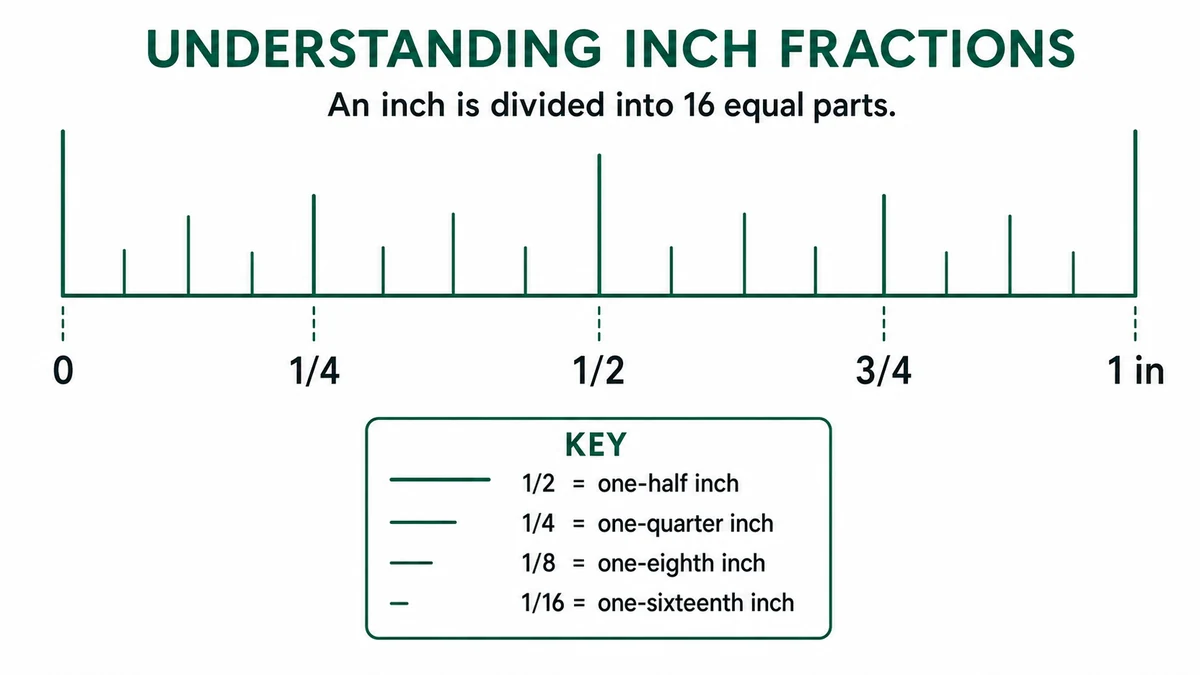
Longer ticks represent larger fractions. Between whole-inch marks, the half-inch tick is longest, followed by quarter, eighth, and sixteenth ticks.
| Fraction | Decimal inch | Millimeters |
|---|---|---|
| 1/2 | 0.5 | 12.7 |
| 1/4 | 0.25 | 6.35 |
| 1/8 | 0.125 | 3.175 |
| 1/16 | 0.0625 | 1.5875 |
Avoid reading errors
Keep your eye directly above the mark, note the unit, and record uncertainty when the endpoint falls between ticks.
- Check whether the scale begins at the edge.
- Reduce fractional inches before recording.
- Do not convert a rough ruler reading into unsupported decimal precision.
Questions about this topic
What is the smallest mark on a standard inch ruler?
Many rulers mark sixteenths of an inch, but some use eighths, thirty-seconds, or another resolution. Check the actual scale.
How many millimeters are in one sixteenth of an inch?
One sixteenth of an inch is exactly 1.5875 millimeters.