Significant Figures and Rounding in Length Conversion
Carry extra digits during calculation, then round the final result to a precision supported by the original measurement and its intended use.
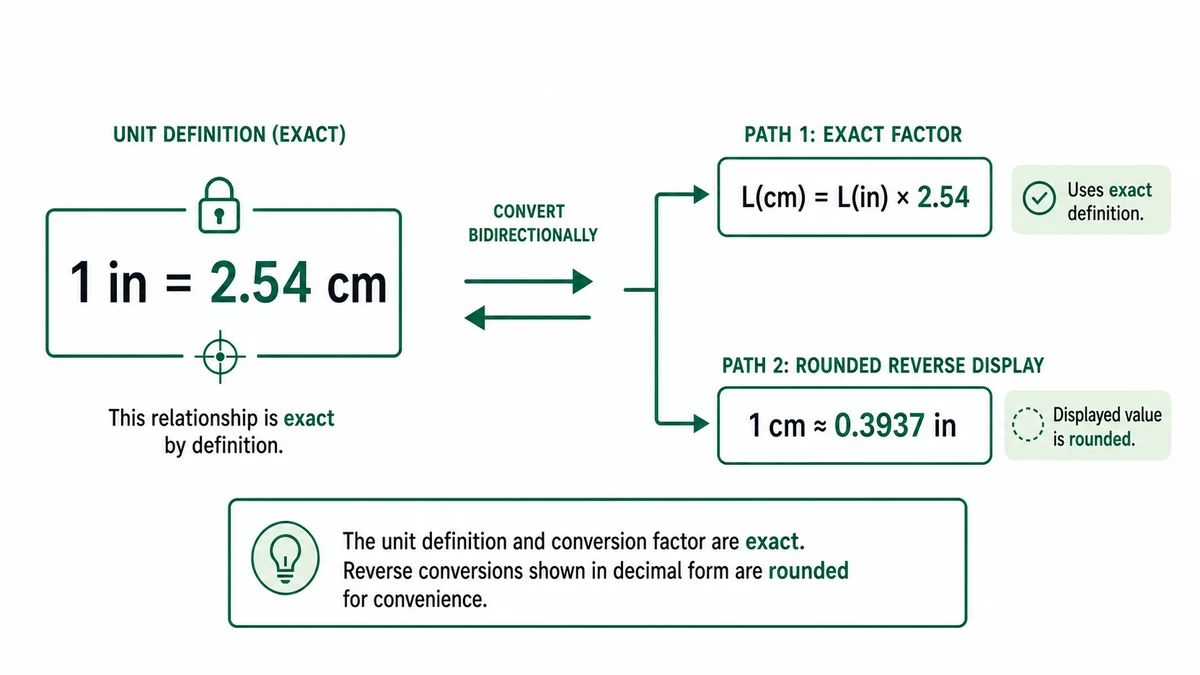
Precision is not decoration
Writing more digits can imply a finer measurement than was actually made. A tape measure reading and a laboratory instrument reading should not automatically produce the same number of reported decimals.
A dependable rounding workflow
Use the exact or full stored factor, retain guard digits through intermediate steps, and round the final answer only once.
- Identify the source resolution.
- Decide whether the result is for estimation, communication, or specification.
- Keep at least two guard digits during calculation.
- Round and include the target unit.
Decimal places versus significant figures
Decimal places count positions after the decimal point. Significant figures count meaningful digits from the first nonzero digit. Small converted values often need several decimal places to preserve only a few significant figures.
| Raw result | Possible report | Use |
|---|---|---|
| 0.3048 m | 0.305 m | millimeter-level communication |
| 1.609344 km | 1.61 km | general estimate |
| 25.4 mm | 25.4 mm | exact inch relationship |
Questions about this topic
Should I round the conversion factor first?
Usually no. Keep the full factor and round the final result to avoid accumulating error.
How many decimal places should I use?
Use enough to support the source measurement and intended decision; there is no single correct count for every situation.