How to Choose the Right Length Unit
Choose a unit that keeps the number readable, matches the measuring tool and required standard, and communicates an appropriate level of precision.
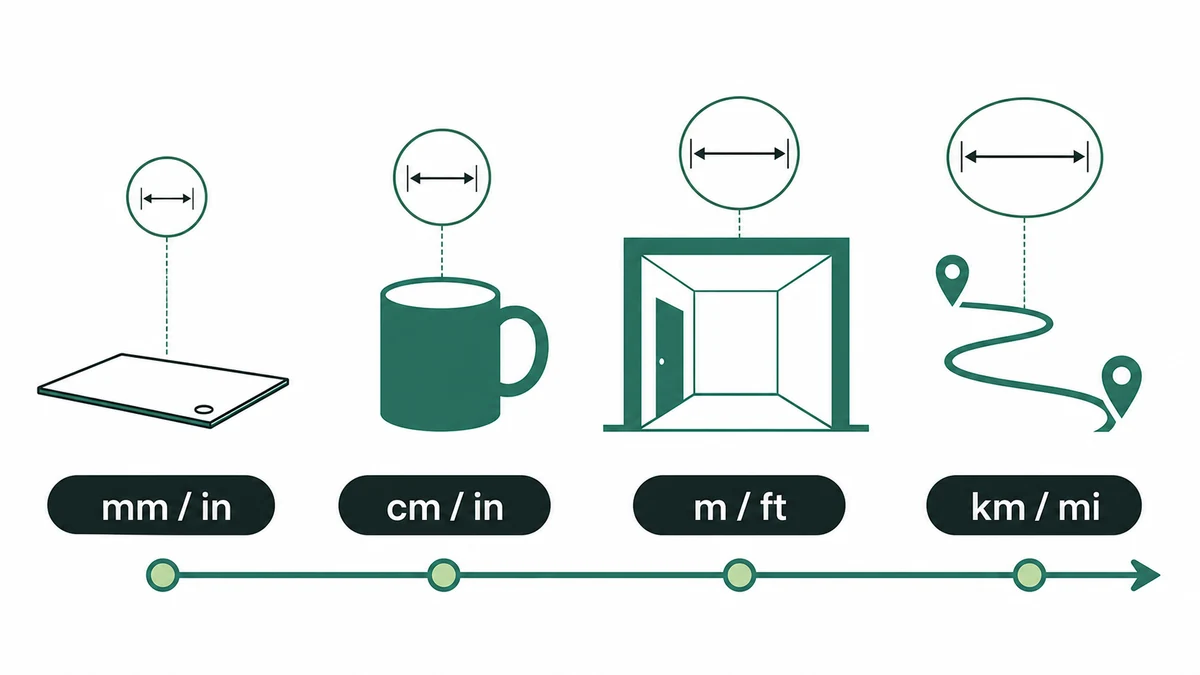
Match the unit to the scale
Numbers are easiest to compare when they are neither extremely small nor padded with many zeros. Millimeters suit hardware details, meters suit rooms, and kilometers or miles suit routes.
| Measurement | Typical metric choice | Typical customary choice |
|---|---|---|
| Small thickness | millimeter | fractional or decimal inch |
| Object or body | centimeter | inch |
| Room or building | meter | foot |
| Travel distance | kilometer | mile |
Respect the working context
A regulation, drawing, customer, machine, or dataset may require a particular unit. Preserve the original value and document any conversion when the result affects purchasing, construction, or safety.
Choose precision after choosing the unit
A suitable unit reduces awkward decimals, but it does not determine accuracy. Report only the precision justified by the measurement method.
- Use the unit printed on the measuring instrument when possible.
- Prefer a familiar unit for the audience.
- Include the symbol in every table column and exported field.
- Keep a traceable original value for repeated conversions.
Questions about this topic
Should I avoid decimals by changing units?
Often that improves readability, but keep the unit required by the standard or workflow and do not imply unsupported precision.
Which unit should I use for construction?
Use the unit system and notation required by the drawings, code, contract, and local practice; do not mix systems without clear labels.